
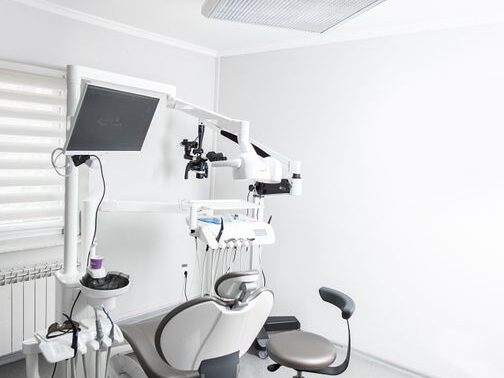
Opening a dental office is not just about finding a space, purchasing a dental unit, and starting to see patients.
Providing dental care is a medical practice, and therefore requires obtaining an appropriate license from the Ministry of Health of Ukraine. In addition, before starting work, you need to correctly choose the form of business, check the premises, provide the necessary equipment and attract employees with appropriate qualifications.
At the same time, the rules for licensing medical practice have changed repeatedly in recent years, and from September 1, 2026, the next changes to the Licensing Conditions will come into force.
Let’s consider what needs to be taken into account before opening a dental office.
Individual entrepreneur or legal entity?
Medical practice in Ukraine can be carried out by a healthcare institution created by a legal entity, or by an individual entrepreneur with an appropriate license.
In practice, an individual entrepreneur is often chosen for a small dental office. This model may be convenient if the business has one owner, a small number of employees and does not involve a complex corporate structure.
If you plan to create a clinic with several areas, a significant number of staff, partners or investors, it is advisable to consider operating through a legal entity, in particular an LLC.
The choice must be made before obtaining a license, since it is the relevant individual entrepreneur or legal entity that will be the licensee and will be responsible for complying with licensing requirements.
Which taxation system to choose?
A dental office can operate under different taxation models depending on the chosen form of activity, expected turnover, cost structure, number of employees and contractors.
An individual entrepreneur may choose a simplified taxation system, subject to compliance with the requirements of the Tax Code of Ukraine. For the second group, restrictions apply to the number of employees, marginal income and the range of service customers. The third group is more flexible: there is no restriction on the number of employees, and the single tax is paid as a percentage of the income received.
Today, it is necessary to take into account not only the single tax and the social security contribution, but also the military levy. For individual entrepreneurs – payers of the single tax of the second group, it is paid in a fixed amount, determined based on the minimum wage, and for individual entrepreneurs of the third group – in the amount of 1% of income.
A legal entity can work, in particular, on the general system with the payment of income tax or, subject to compliance with the established conditions, on the third group of the single tax.
VAT requires special attention. The tax consequences depend on the organizational form of the entity, the nature of the services, the status of the healthcare institution and the volume of operations. Therefore, it is advisable to choose the taxation system for the dental business together with the future model of its work.
License for medical practice
Regardless of whether an individual entrepreneur or a legal entity is chosen, the provision of dental care requires a license to conduct economic activities in medical practice.
The main requirements are determined by the Licensing Conditions for Conducting Economic Activities in Medical Practice, approved by the Resolution of the Cabinet of Ministers of Ukraine dated March 2, 2016 No. 285.
The licensing authority is the Ministry of Health of Ukraine.
At the stage of obtaining a license, it is necessary to determine the location of medical practice, the specialties in which medical care will be provided, the material and technical base and staffing.
Therefore, first of all, it is necessary to clearly determine which dental services are planned to be provided, and only then to form premises, equipment and staffing composition.
What is changing from September 1, 2026?
From September 1, 2026, changes to the Licensing Conditions for conducting business activities in medical practice come into force.
The changes relate, in particular, to staffing and specialties in which medical practice can be conducted.
The updated Licensing Conditions provide for medical specialties, specialties of professionals and specialists in the field of health care, and relevant requirements for persons providing medical care.
Employees must meet the requirements of professional standards put into effect in accordance with the established procedure, and in their absence – the relevant qualification characteristics.
For each declared specialty, it is necessary to ensure the presence of at least one healthcare worker of the relevant specialty. In this case, employees who work part-time may also be taken into account.
Therefore, if documents for a dental license are prepared with the expectation of work after September 1, 2026, the personnel department must be immediately formed in accordance with the updated requirements.
Premises requirements
Medical practice is carried out at a specific place of its conduct, information about which is indicated in the documents for obtaining a license.
That is why not every office or commercial premises is automatically suitable for a dental office.
When choosing, it is necessary to take into account the current state building codes for healthcare institutions, sanitary and anti-epidemic requirements, requirements for inclusivity and accessibility for persons with disabilities and other low-mobility population groups, as well as the specifics of a specific medical activity.
Old requirements of DBN V.2.2-10-2001, which were previously often used when arranging dentistry, is no longer a relevant regulatory framework. When designing, reconstructing and equipping the relevant premises, it is necessary to focus on current building and sanitary standards.
The accessibility of the premises for people with limited mobility should be checked separately. The licensing conditions provide for relevant requirements regarding the accessibility of the place of medical practice.
Therefore, it is advisable to check the premises before concluding a long-term lease agreement and carrying out expensive repairs. Otherwise, after its arrangement, it may turn out that the premises require additional reconstruction or re-equipment.
Is a sanitary and epidemiological inspection certificate needed?
The old procedure for obtaining a dental license provided for separate requirements for the sanitary and epidemiological inspection of the premises.
Today, the Licensing Conditions do not provide for the submission of a sanitary and epidemiological inspection certificate as a separate document for obtaining a license for medical practice.
However, this does not mean that sanitary requirements can be ignored.
During the work of the dental office, the current sanitary and anti-epidemic requirements, rules for infection control, disinfection and sterilization of medical devices, medical waste management and other mandatory requirements in the field of public health must be observed.
That is, the absence of the need to obtain a separate certificate for licensing does not exempt dentistry from complying with the relevant requirements in everyday practice. work.
Dental office equipment
Before submitting documents for a license, it is necessary to determine the material and technical base necessary for work in the declared specialties.
The equipment must correspond to the actual nature of the medical care that will be provided in the dental office and the requirements of the law.
Therefore, you should not simply copy the list of equipment from documents of another dentistry or focus on outdated lists. The necessary equipment depends on the specialties and medical interventions that are actually planned to be performed.
Separate requirements arise if dentistry plans to perform more complex interventions, use sedation, anesthesia, or other specialized equipment.
Such services must be taken into account at the stage of forming the licensing model, as they affect both equipment and personnel requirements.
Personnel requirements
Even a fully equipped dental office cannot provide medical care without employees with appropriate qualifications.
Doctors and other healthcare workers must have the education, specialty, and professional qualifications necessary to perform the relevant work.
From September 1, 2026, the Licensing Terms will orient licensees to professional standards, and in their absence, to the appropriate qualification characteristics.
Therefore, when forming the personnel part of the license information, it is necessary to check the entire set of documents confirming the employee’s right to work in the relevant specialty.
The individual entrepreneur may also involve other doctors, professionals and specialists in the field of healthcare, if their qualifications meet the declared specialties and the requirements of the License Conditions.
Is it necessary to employ doctors before obtaining a license?
Not necessarily.
Employees can be specified in the information submitted for obtaining a license, and employment relationships can be formalized after the decision to issue it is made.
From September 1, 2026, the License Conditions provide that the licensee must, no later than within one month from the date of the licensing authority’s decision to issue a license or expand the scope of medical practice, conclude employment contracts with healthcare workers specified in the submitted documents.
If concluded an employment contract with the declared employee is impossible, the licensing authority must be notified of this in accordance with the established procedure.
Therefore, in fact, the future team must be formed before submitting documents, even if official employment will take place after obtaining a license.
How to obtain a license?
To obtain a license, an application and information on the state of the material and technical base and the availability of personnel, indicating their educational and qualification levels, are submitted to the Ministry of Health.
It is this information that is the main substantive document in the procedure. They contain information about the place of medical practice, declared specialties, premises, equipment and employees.
Therefore, the difficulty of obtaining a license lies not so much in filling out the application, but in ensuring that the actual organization of the dental office corresponds to the information declared by the Ministry of Health.
The decision to issue a license or refuse to issue it is made by the licensing authority within the period established by the licensing legislation.
After obtaining a license, it is necessary to continue to ensure compliance of the activity with the License Conditions and notify the Ministry of Health of changes in information in cases and in the manner prescribed by law.
ESH and medical documentation
Obtaining a license is only one of the stages of launching a dental office.
During work, it is necessary to properly maintain medical documentation and comply with the requirements for the electronic health care system in cases prescribed by law.
Therefore, even before the start of the reception patients should organize work with medical information, personal data of patients, the relevant medical information system and internal documentation.
It is especially important to ensure proper protection of information about the health of patients, since such information requires a special processing and storage regime.
What should be done before opening?
One of the most common mistakes is to first rent a room, carry out repairs and purchase equipment, and only then start checking licensing requirements.
It is safer to act in reverse order.
First, you should determine the list of dental services and necessary specialties, choose between an individual entrepreneur and a legal entity, check the premises, form a list of equipment and future staff.
Only after this is it advisable to proceed to significant costs for repairs and equipment.
This approach allows you to avoid a situation where an already finished dental office has to be re-equipped due to non-compliance with licensing, construction or other mandatory requirements.
Conclusions
Opening a dental office requires the simultaneous resolution of several issues: choosing a form of business and a taxation system, selecting a suitable premises, forming a material and technical base and staffing, obtaining a license and organizing further work in accordance with the requirements of the law.
At the same time, licensing rules continue to change. From September 1, 2026, amendments to the Licensing Conditions will come into force, which, in particular, update personnel requirements and approaches to determining the specialties in which medical practice is conducted.
Therefore, it is advisable to start preparing a dental office for opening by checking the future legal and licensing model. This allows you to understand, even before the costs of repairs and equipment, whether the chosen business format meets the requirements for obtaining a license and further work.
Are you planning to open a dental office or clinic? We will help you check the chosen model and go through the medical practice licensing procedure.





